

Women’s golf is the next major opportunity in sports. And it’s already happening right under our noses, with a 45 percent increase in women’s participation since 2020 in the US alone. Globally, some 36 million women are now playing the game. This boom is being built from the ground up, not by brands, but by players.
Beyond is an insight and strategy company shaping the future of sport and culture. In our fieldwork around the world, we’re hearing and seeing the growth of female golf. We spoke to three people in our network (Russell Winfield, Mollie Plocher and Sydney Schwartz) to dig into the why. In this piece, we unveil our predictions about why brands shouldn’t sleep on it.
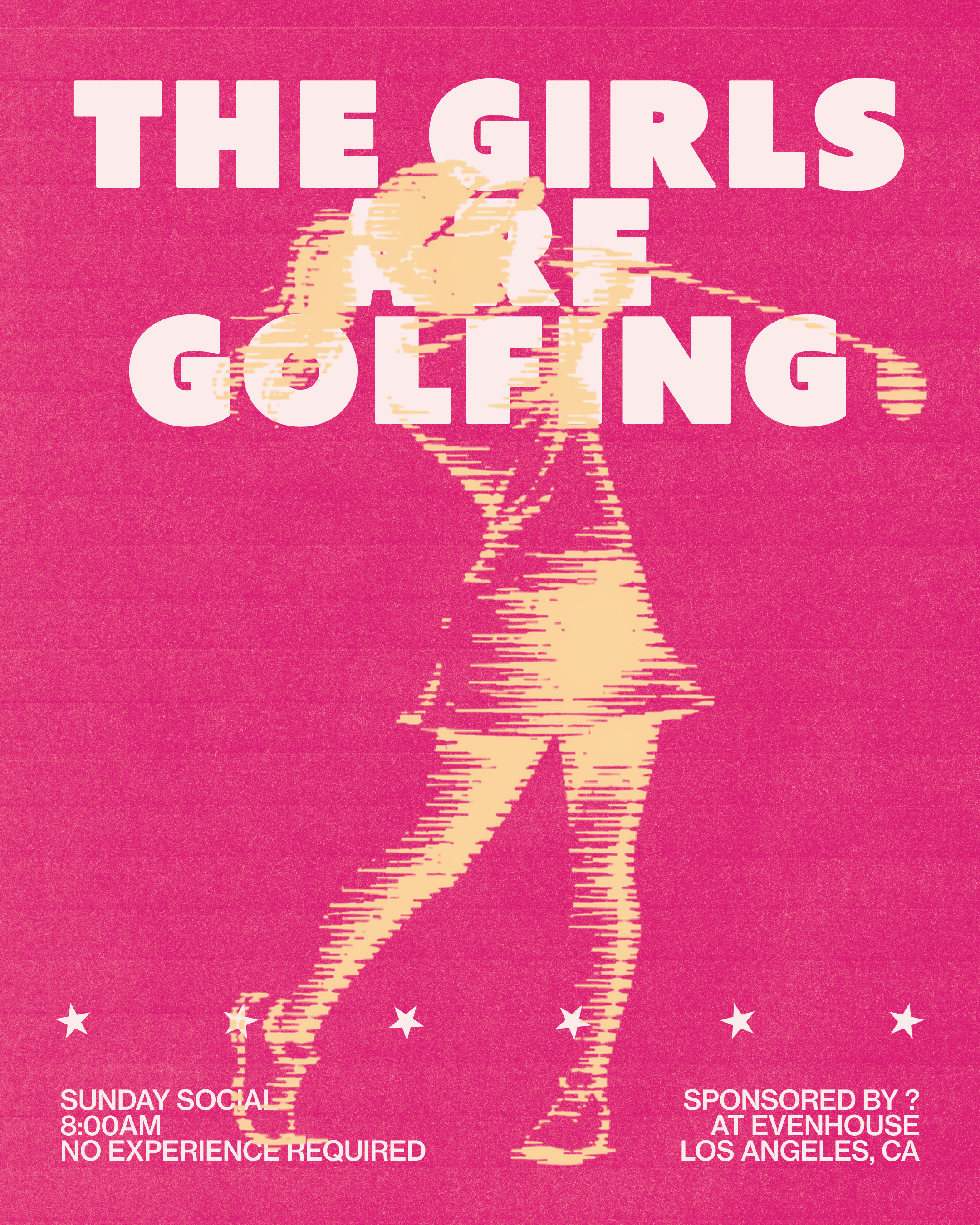
The sudden rise of golf is not entirely surprising. Since 2021, sports as a social play has been rising, transforming both the entire fitness landscape, our schedules, and our interpersonal relationships. More than that, it has altered modern culture, defining how we wish to spend time, energy, and money. Pilates is booming, but for many women, a 50-minute class lacks the human-to-human connectivity required in today’s online world—you can’t have a conversation on a reformer machine or while holding a downward dog. The impact? Many are turning to golf.
Golf is an evolution of Pilates culture for myriad reasons. It offers an environment that is even more aspirational, with its immaculate lawns, its golf carts and its inherent exclusivity. It’s become a quiet signal and a status hobby: it telegraphs affluence, tapping into the ongoing fetishisation of waspy American-leaning culture happening across TV and literature. Think: White Lotus, The Summer I Turned Pretty and Emma Cline’s The Guest, which was set in The Hamptons.
Golf also telegraphs an affluence of time. With games lasting three-to-four hours, it offers true bonding time with friends and a complete disconnect from online life, and it does it in an incredibly aesthetic way. It’s also a low-impact method of exercise that aligns with the overall wellness of Pilates. “You go to Pilates, you get your matcha, and then you go and play golf,” says Winfield, a creative director and sportswear designer. Women are not choosing “one or the other.” It’s Pilates midweek and golfing weekends. For some, golf can offer ‘hot girl walk’ with a game attached. In the US, half of women golfers are under the age of 35.
For others, being a golfer comes with other, meaningful opportunities. “I’m one of the few girls that plays golf on my team, and I’ve been put in situations with executives I never would have been invited to because they needed a fourth player,” says Sydney Schwartz, a partnerships and events lead at NBC Universal, based in New York. Entrepreneurs and women within corporate spaces are finding the career benefits of golf advantageous. The duration of the game also offers a real chance to broaden one’s social circle. “I have a girlfriend who doesn’t play, but she wants to pick it up because she thinks she can meet people that way,” adds Schwartz. Exercise classes like Pilates tend to become a means of socializing with women you already know; the in-and-out nature of studios that have classes on the hour, every hour, means there’s very little potential to chat to a new person for long enough that the relationship extends beyond the space.
WHAT’S DRIVING WOMEN TO THE RANGE?
The need to get offline and go outside is more paramount than ever. While apps like Endel and products like Brick are becoming a growing part of the zeitgeist—by encouraging us to disconnect from our phones—a game of golf is a tangible alternative that actually fosters wellbeing. Sure, you might snap some highly Instagrammable shots of the green, but golf requires a focus, discipline and presence that can feel a lot like a mental reset; there’s little temptation to check WhatsApp or your emails when you’re deep into an 18-hole round. Golf also offers women access to nature in a secure environment; hiking and countryside walks in fields do not offer the same safety.
Golf’s draw for women is clear. What’s equally apparent is the fact that the sector is not set up to welcome her. Beyond the green, golf pretty much looks the same as it always has done: a male-dominated space that caters to men. The golf shops within members clubs are still run by men; the in-shop buy still skews 80 percent men’s gear. In fact, the entire women’s business in golf is referred to as “ladies”, rather than women’s—and Plocher says that’s an issue. Why? It’s an alienating term for today’s young woman as it incites a sense of frivolity— it’s a ‘ladies who lunch’ mood which jars with the ambition and entrepreneurship of today’s demographic. Layer this atop the reality that women’s roles within the golfing landscape have been tied to the subservience of pouring drinks: golf’s infrastructure is incredibly outdated. It’s time for a rebrand.
GREEN SHOOTS EXIST, BUT WHERE?
On Instagram, women such as Savannah Gowarty, a former Manhattan real estate agent and TV star-turned-fashion influencer, has been posting a lot of golfing content to her 86,000 followers. Others, such as Gabriella DeGasperis (@gabbygolfgirl), have amassed 1.2 million followers—she posts exclusively about her games.
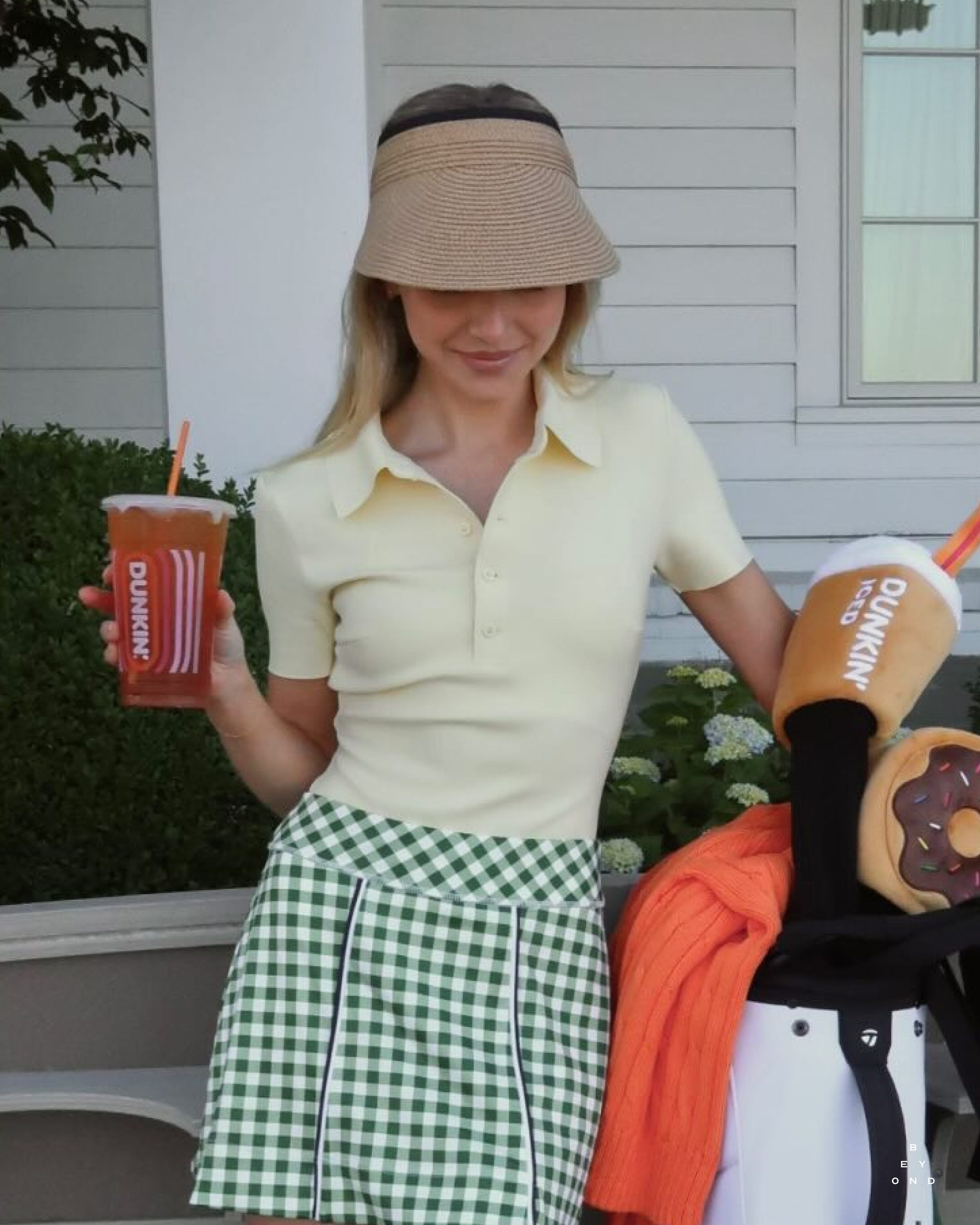
In APAC, the culture around the women’s game is also developing. Uniqlo, an unexpected player, is making inroads with the Asian market, with women’s activations and collections that prove this new generation of players aren’t necessarily gravitating towards typical performance wear. In APAC, the sport is synonymous with the lifestyle which has been a key driver of participation: influencers in the region post golfing content that emphasises being a beginner and taking lessons. For a sport traditionally wrapped in exclusivity, the mood in APAC is all-areas-access. No talent or prior experience required.
Ina Kim-Schaad, a 42-year old Pro showed what the next era of golf might look like at the US Open. She played wearing tailored trousers, Argyle knitwear with a visor and a silk neckerchief.
Lacoste has also begun courting the local crowd through community events within renowned driving ranges in Tokyo. Capturing this urban customer is key: they are likely the ones spending a higher proportion of their income on social sports and wellness activities. The rise of tenniscore and golf’s natural preppiness means Lacoste is perhaps primed to dominate here: set against the bright green backdrop of the courts, tennis presents a similar visual identity that can lend itself to golf. Tennis’ preference for polo silhouettes, ‘court whites’ that work well on the lawn and accessories such as visors perhaps make it an easier aesthetic assimilation.
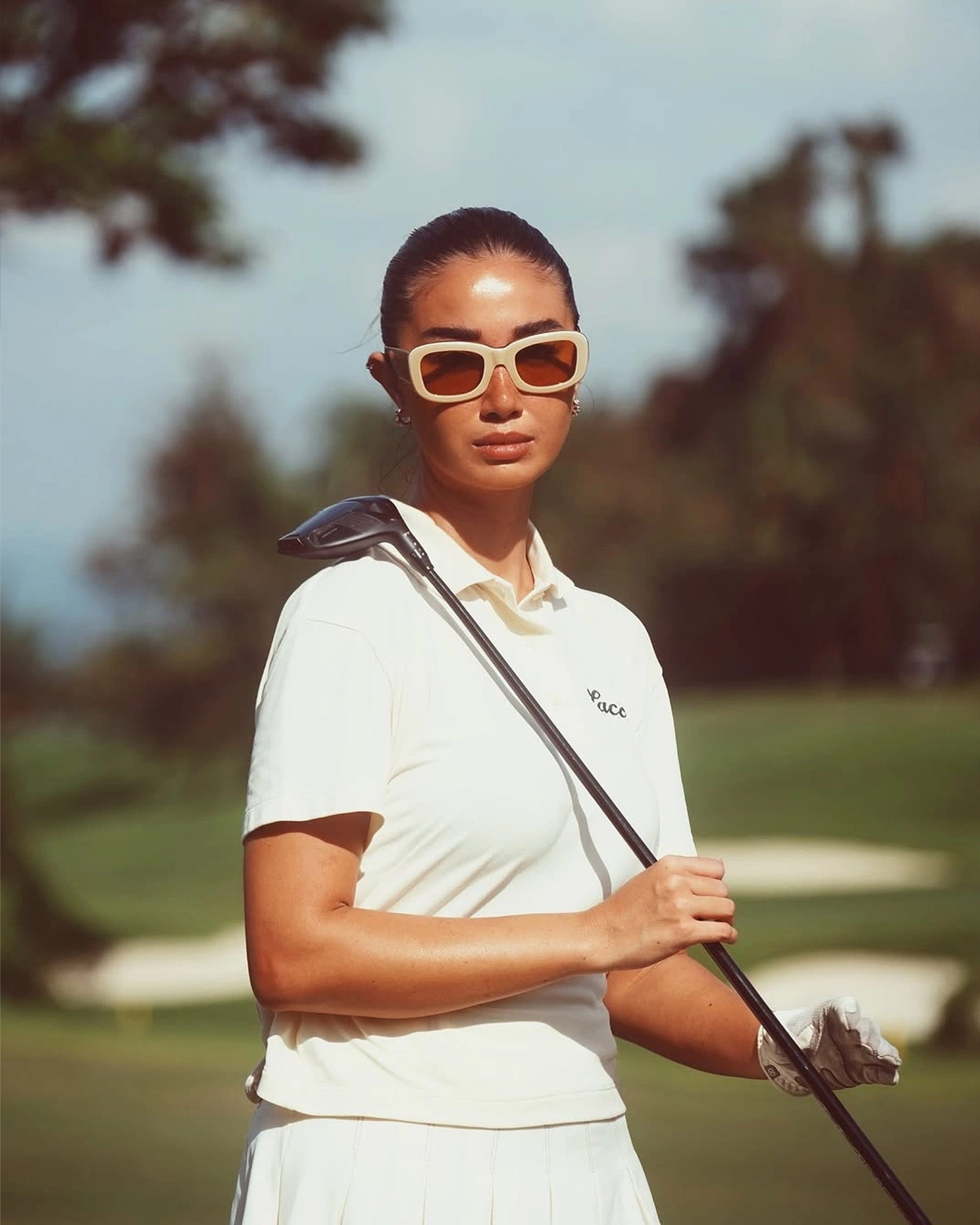
Movers in the space should pay attention to the lifestyle adjacency of golf for today’s woman. Brands need to pay attention to “fabrics, silhouette, technical performance and the way it moves,” says Winfield, noting that want to invest in multi-purpose clothing that’s practical both on and off the range: gear that can be worn “on the golf course, out for a chilled red, walking your dog. It can be all three,” he says. “It just doesn’t exist yet.”
A grassroots take on modern golf attire is building. Gowarty has been wearing white tailored trousers with knitted polos from Loro Piana with tonal caps and a glove; DeGasperis has been sporting A-line mini-skirts with sweatshirts and headbands.
“Women are getting really creative with their apparel,” says Mollie Plocher, founder of a retail design consultancy specialising in golf environments. The hobby golfers’ stylistic individualism is a counterpoint to the industry’s old school Palm Springs aesthetic; most women’s golfwear is cut to old-school silhouettes and not created with design intention.
This is happening at elite level, too. Ina Kim-Schaad, a 42-year old Pro who competed in the US open in June, demonstrated what the next era of golf might look like. She donned tailored trousers, stripey or Argyle knitwear with a visor and a silk neckerchief for the tournament. Women are looking for creativity and self-expression within the sport.
At Beyond, we’re excited about golf’s potential for brands. Defining the culture of new-age golf for women is a white space that, so far, no brand is owning. Nicola Strange, Beyond’s Insight Director and Co-Founder, starts golf lessons at her local club this month. She says it wasn’t difficult to find seven other women to play with, but a friction was noted via the group WhatsApp chat before they’d even got started: “what do we wear?”
lululemon and Varley have made inroads at member stores in the US, but the most directional gear so far is coming from Malbon. The aesthetic of today’s offerings remain safe; so far, no brand has cracked what the next generation of golfing attire actually looks like. There isn’t a look that women want to identify with, in the same way that lululemon redefined studio-wear, and Gymshark transformed what women’s gym shorts looked like. For women’s golf, that kudos is still up for grabs.
The white space is both physical and sartorial. To date, there are no golf shops or member spaces that cater to women shoppers. Evolution is happening within clubs: Evenhouse, a 2025-opened golf members and coworking space in Orange County is situated on a driving range; it’s the perfect example of the next generation club. Its shop stocks Fore All, a women’s golfing brand with a heavy lifestyle adjacency: its visors have raffia peaks and are embroidered with “Country Club” lettering.
Today’s brands should envisage the next generation of golf clubs as a primary destination for both retail and customer acquisition. Who is the customer here? What is she wearing? How does she want to approach the ceremony of golf in a way that feels modern? Maintaining traditions but rendering the mood and aesthetic anew will be critical.
There exists a rare opportunity within golf today: create an aesthetic from scratch for a heritage sport with a fast-growing customer base. Running culture has exploded in recent years, but the independent, design-led brands (with most founded around 2015) pre-dated the 2021-onwards social boom they have experienced great success with. The next generation of golfers are already here. And these women need—and deserve—brands to acknowledge them in an inspiring and considered way. Given apparel brands today can change participation trends, it’s a meaningful play: a new aesthetic and an authentic investment in culture and community will get more women into golf.
Decathlon has a unique opportunity to own the customer journey via equipment. Known for its high quality products at attainable price points, Decathlon will cater to newer women golfers for whom clubs do not hold the same lore of social status as they do for men. That the retailer prides itself on its friendly and accessible atmosphere is another persuasive sell to women: buying equipment can be intimidating, and the ability to play and practice with in-store demo clubs, in a store that is purposefully set up to incite play, could become a key part of a woman’s golfing journey.
Designers should be additionally excited. There’s a level of technicality required in golf attire, but the considerations for sweat-wicking, lightweight fibres and chafe-free finishes are not as apparent here as they are in other sports. There’s a greater freedom to be found. The heavy lifestyle adjacency also provides an open door for more knitwear and tactile, natural fibres like heavier-weight cottons.
Nike’s technical ability and the fact its lifestyle collections have an increasingly directional aesthetic offer a potent opportunity for the brand: the tailored separates within its 247 collection is a good base from which it could build.
We may not see the most exciting innovations from major heritage players like Adidas or New Balance, given both are primarily known for footwear rather than apparel. If Asia is leading by example, expect more influence from preppy lifestyle brands like Polo Ralph Lauren, Fred Perry and Lacoste and even Sporty & Rich. Given On’s prowess for straddling both fashion and function, plus its in-the-know influencer roster, perhaps On will be the brand to perfectly execute the balance.
Either way, golf is up for grabs. Who will be the first to drive to the range?
Beyond is an insights and strategy company based in London and Los Angeles. Tomorrow’s Tomorrow is our editorial platform, where we connect culture signals with commercial consequence.
Fantastic write up